

Tolland Youth Diversion Team (YDT)- formerly Juvenile Review Board (JRB)
What is the Youth Diversion Team (YDT) formerly Juvenile Review Board (JRB)?
Tolland Youth Services manages the Youth Diversion Team (YDT) formerly Juvenile Review Board (JRB)—a community-based, trauma-informed restorative justice diversion program for youth ages 10 to 17 involved in an arrestable offense. Instead of facing court or probation, youth participate in a process where they take responsibility, hear from those impacted, and create a plan to repair harm. We bring together youth who have caused harm, those who have been harmed (if they choose to participate), and trained volunteers in a safe, facilitated setting. Together, they work to understand what happened, collaboratively determine what needs to happen to correct the harm, and how everyone can move forward.
Youth Diversion Team members may include:
- Youth Service Bureau staff
- School administrators, guidance counselors, and social workers
- Law enforcement officers
- Juvenile Court personnel
- Department of Children and Families staff
- Local service providers (e.g., mental health agencies)
- Members of the faith community
- Local business representatives
- Other community members with relevant expertise
Tolland’s Restorative Justice Approach
Our approach holds youth accountable for their actions while creating opportunities for them to repair harm and restore relationships. Using a strengths-based, family-centered model, the YDT eliminates the need for court involvement when possible and provides support and mentorship to both youth and families.
Who Can Refer to the YDT?
Referrals may be made by:
- Schools
- Police
- Juvenile and adult courts
- Local youth-serving agencies
- Parents and caregivers
- The youth themselves
Every case receives Case Management to assess needs, plan interventions, coordinate services, and provide ongoing support in the areas of education, emotional health, mental health, and physical well-being.
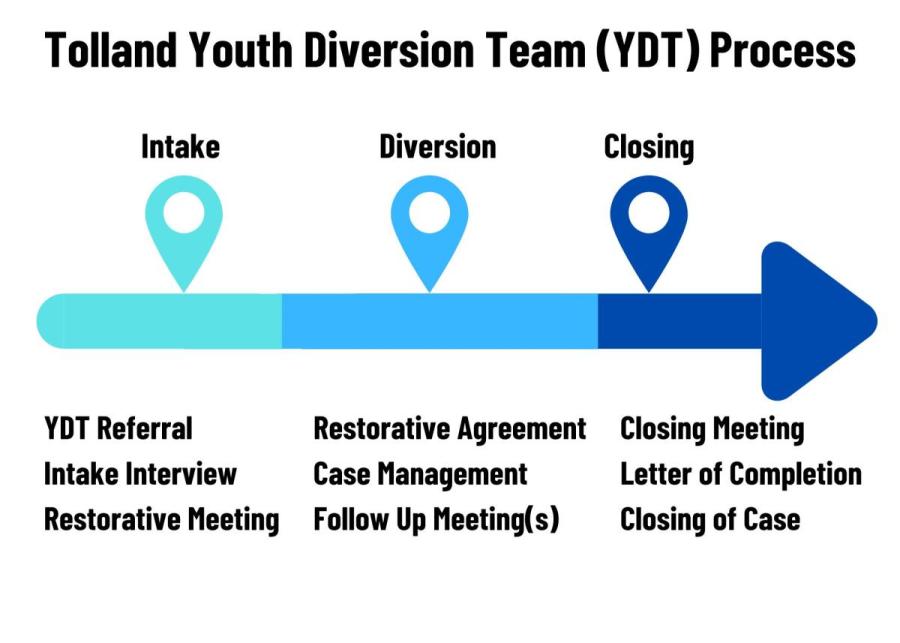
The YDT Process (6 Months)
1. Referral
- A referral is submitted to Tolland Youth Services.
2. Intake Interview
- The Case Manager contacts the family to explain the voluntary program and schedule an intake.
- Intake includes evidence-based screening tools to understand needs, strengths, and risks.
3. Case Preparation
- The Case Manager prepares the case for the YDT, focusing on a family-centered, strengths-based approach.
4. Restorative Meeting
- The youth and family meet with the YDT.
- The youth explains what happened and why they believe the YDT should take their case.
- The YDT collaborates with the family to create a Restorative Agreement—a contract outlining actions and diversions to be completed within 6 months.
Possible Diversions include:
- Community service hours
- Counseling or therapy
- Letters of apology
- Essays or presentations related to the offense
- Job shadowing or career training
- Positive youth development programs
- Behavioral health or substance use assessments/education
5. Ongoing Case Management
- The Case Manager supports the youth and family, monitoring progress and adjusting the plan as needed.
6. Closing Meeting
- The youth presents completed diversions to the YDT.
- Success is celebrated, and continued engagement in helpful programs is encouraged.
- A Letter of Completion is provided to the youth and referring agency.
If unsuccessful:
- The case is referred back to the original agency (often Juvenile Court).
- The family receives a Letter of Unsuccessful Completion.
Our Impact
The Tolland YDT consistently achieves a high percentage of successful case completions. By focusing on accountability, skill-building, and ongoing family support, we help keep youth out of the juvenile justice system while building pathways to future success.
Please contact the Tolland YDT Case Manager, Teresa Kristoff, with any questions regarding the YDT process at 860-871-3612 or tkristoff@tollandct.gov.